
Independent professionals
Accountants and bookkeepers: quoting by email, the "too expensive" silence, and keeping the lead without discounting
A 2017 AccountingWEB thread shows how a bookkeeping quote unravels by email: the price objection, the discount, the counter-offer. The fix is in what the quote says and what happens after it, not in the number.
Short answer
When a prospect says your fee is too expensive, answer with scope, not a discount: restate what the quote includes, what it excludes, your minimum, and the smaller package that fits a lower budget. In a 2017 AccountingWEB thread, a bookkeeper's £2,400 quote was cut to £1,920 and the prospect still wanted £1,500. If the quote goes quiet, follow up twice with something useful, then close it with a reason.
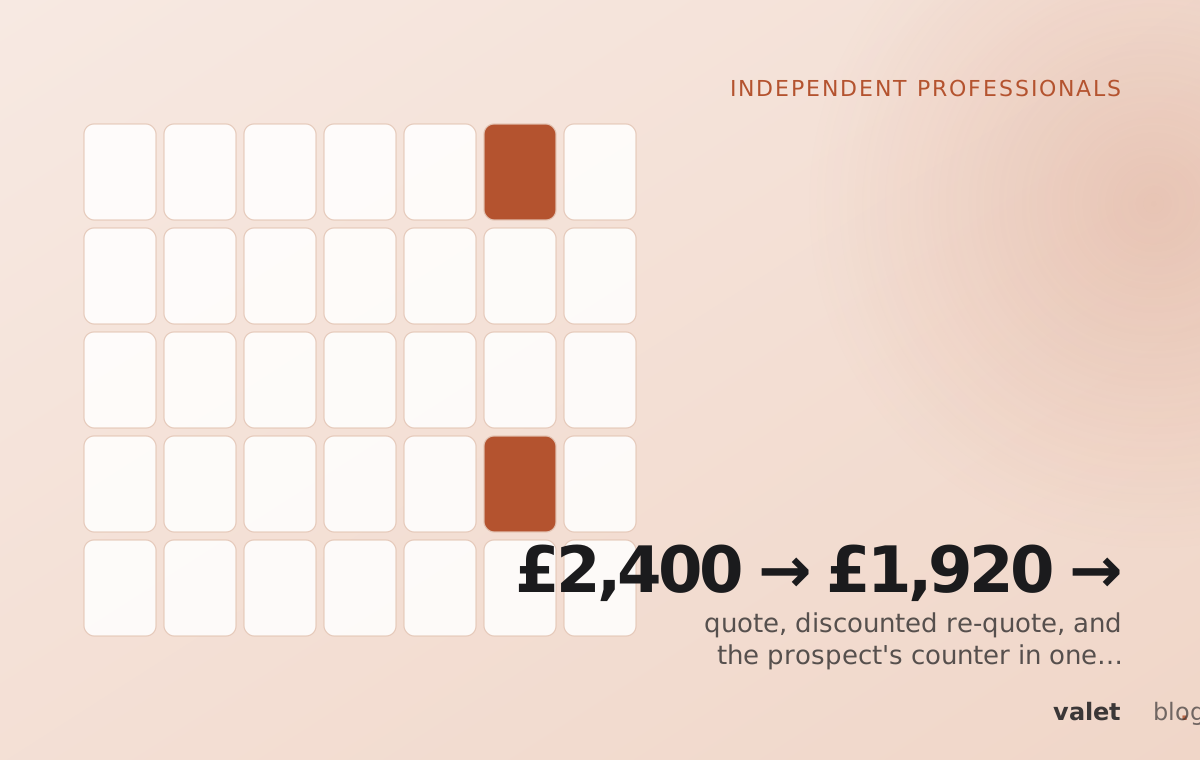
£2,400 → £1,920 → £1,500
quote, discounted re-quote, and the prospect's counter in one email exchange
AccountingWEB Any Answers, 5 Jun 2017
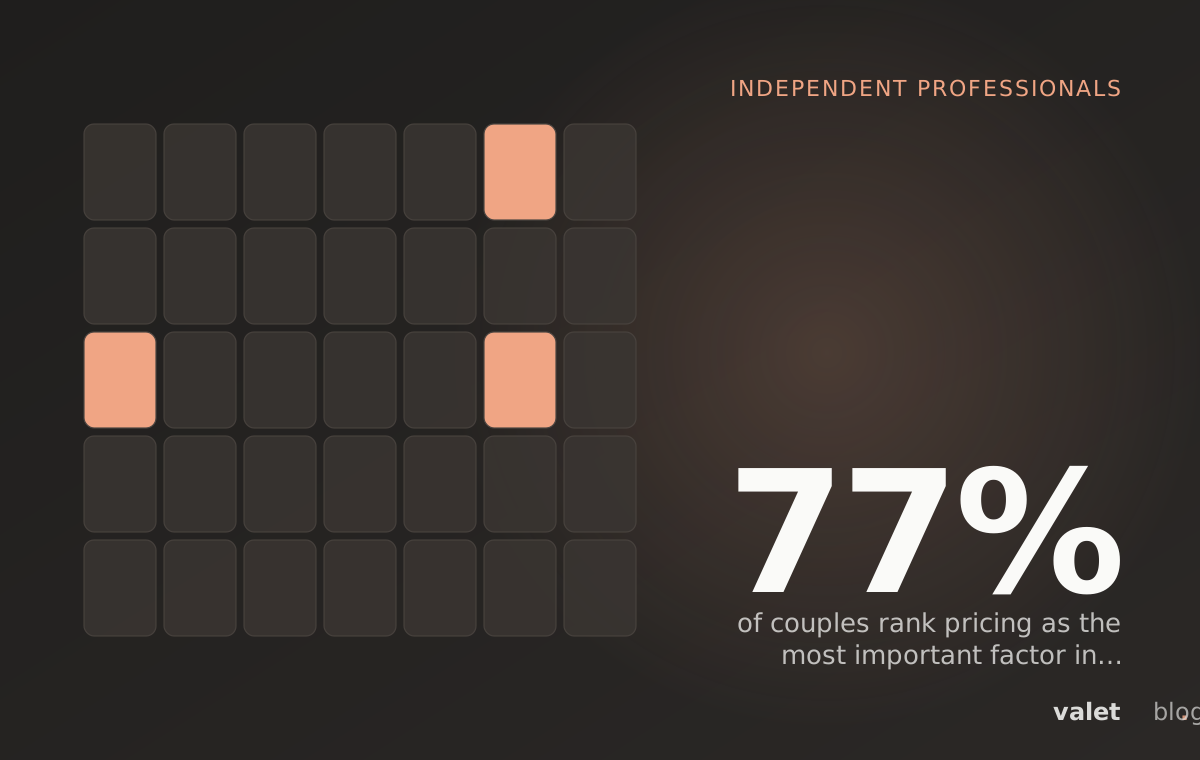
72%
of home-services inquiries got no follow-up at all
Pied Piper PSI, 3,211 inquiries, Apr 2026
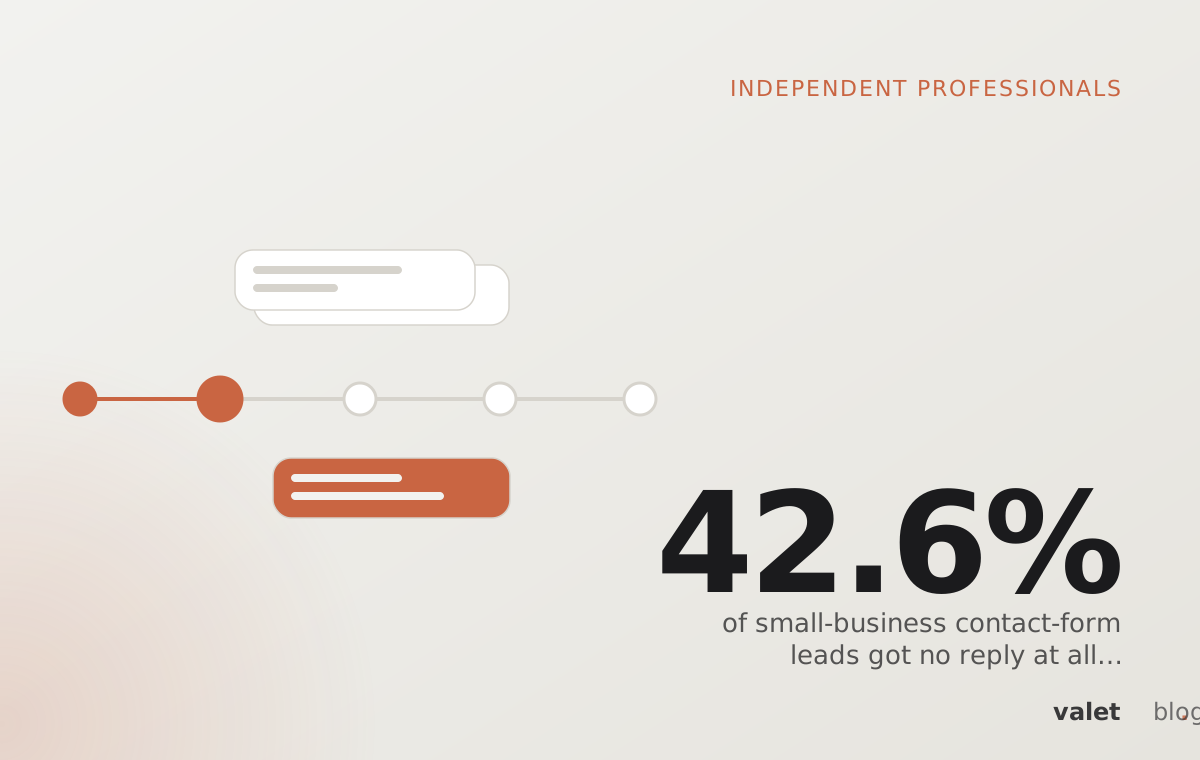
42.6%
of small-business contact-form inquiries never got a reply
Leadferno, June 2024
On 5 June 2017, a bookkeeper posting as A_P_1980 asked AccountingWEB's Any Answers forum a blunt question: a potential new client said the quote was too expensive, so was it?1 The quote was £2,400 a year. The prospect pushed back, the bookkeeper cut it to £1,920, and the prospect named £1,500. The lesson from that thread is the short answer to this article. When a prospect says "too expensive", answer with scope rather than a discount: what is included, what is not, your minimum, and the smaller package that fits. If the quote goes quiet, follow up twice with something useful, then close it with a reason.
What happened in the AccountingWEB "too expensive" thread#
The 2017 thread is useful because the poster laid out every number. The prospect ran a guest house as a partnership with his wife, worked full-time elsewhere, and also let a cottage1. The work quoted was bookkeeping, accounts and monthly bank reconciliations. The poster estimated it plainly: "The bookkeeping will take maybe 5-6 hours a month."1
The prospect's previous firm had charged more. "The accountants were charging £4011 per annum for accounts," the poster wrote, adding that the client said £2k of it related to buying the business1. So the new quote of £2,400 covered more work than before, at a lower headline price.
It did not matter. "He came back to me to say I was a lot more than he'd expected and didn't think he could go ahead at that price."1
Why the discount did not close the gap#
The discount in this thread failed because it answered the wrong question. The prospect was not comparing £2,400 with the work. He was comparing it with a number he already had.
Here is the sequence, as the poster told it. First the objection. Then the concession: "I could reduce the quote to £1920 pa", on the condition that the monthly management accounts came out of the scope1. That is a 20% cut for removing one deliverable. Then the counter: "The figure he had in mind was £1500 pa and upon checking with other guesthouses in the area he found this to be reasonable."1
Look at what the £1,500 was. It was an anchor from neighbours, not a scope. Nobody in the exchange had established whether the guest houses down the road paid £1,500 for monthly bookkeeping and reconciliations, or for a year-end set of accounts and nothing else. One reply raised exactly that doubt, suggesting the £1,500 figure probably did not include bookkeeping at all1.
The other practitioners went further. "You're far too cheap," wrote one, putting the work at "£3,500 minimum"1. Another put it at around £4,5001. So the bookkeeper had started below what peers thought the work was worth, then cut again, and was still £420 short of the prospect's anchor.
This is the pattern 6 Figure Creative describes for freelancers in a different trade: the price question "has killed so many deals for freelancers" and "triggered so many panic discounts"5. The discount is offered to stop the silence. It rarely does.
What the thread's replies said to do instead#
The replies to the 2017 thread split into two practical camps, and both are about the conversation, not the number.
The first camp said hold the price. "You dictate the price not the client just move on and forget it," wrote paulgrca.net, adding that they had "never met anybody who got 100% of the work they quoted for"1. In other words: a quote that some prospects refuse is a quote working as intended.
The second camp asked about the channel. Red Leader wrote: "Have you actually met the prospect or has it all been phone/email? If the latter, I don't think the prospect has been warmed up enough."1 That is a fair diagnosis of a quote sent cold. The fee arrived before the prospect understood what it bought.
Most sole practitioners cannot meet every prospect. The email has to do the warming up. That means the quote itself carries the explanation the meeting would have carried.
How to answer "too expensive" by email without discounting#
A reply to "too expensive" should give the prospect a way to say yes at a lower budget without you cutting the price of the same work. In practice it has four parts.
- Restate the scope in their words. "The £2,400 covers monthly bookkeeping, bank reconciliations, management accounts and your year-end accounts for the partnership." The prospect may not have read it as a list.
- Ask what the lower figure covers. "Do you know whether the £1,500 quotes include monthly bookkeeping and reconciliations, or year-end accounts only?" This is the scope question nobody asked in 2017.
- Offer a smaller package, priced from your list. "If you'd rather keep the books yourself, my year-end-only package is [£]." Different work, different price. No discount.
- Give one next step. "If either works, I can start onboarding on [date]. I'm holding that week for you until Friday."
Jonathan Stark's email reply to a different price question shows the same move. Asked for an hourly rate, he answered with how he prices and a question back: "I give fixed prices so clients never have to pay more if things take me longer than expected. Would that work for you?"6 The reply reframes. It does not concede.
Discounts stay with you. Whether to drop a price is a judgement about this client, your capacity and your floor. It should never be improvised by a template, a junior or an assistant. Treat any request to haggle as an exception queue item: the prospect is told when you will reply, and you decide.
Some practitioners will still discount for a given client, and that can be the right call. The point is that it is a decision, made once, with a reason you can see later. A post titled "Price Floor for Bookkeeping" sat on r/Bookkeeping's front page in October 2026, which suggests the question of where the floor sits is still very much open.
The "what's included" sheet for bookkeeping packages#
A "what's included" sheet is the document that lets your quote email explain itself. Build it once, attach it to every quote, and use it to answer "too expensive" with scope.
| Field | Package A [name] | Package B [name] | Package C [name] |
|---|---|---|---|
| Price and billing | [£ per month / per year] | [£] | [£] |
| Who it suits | [e.g. sole trader, under N transactions a month] | [ ] | [ ] |
| Bookkeeping | [monthly / quarterly / none] | [ ] | [ ] |
| Bank reconciliations | [monthly / quarterly] | [ ] | [ ] |
| Management accounts | [monthly / quarterly / no] | [ ] | [ ] |
| Year-end accounts and returns | [which] | [ ] | [ ] |
| Not included (charged separately) | [e.g. catch-up work, extra entities] | [ ] | [ ] |
| Minimum fee or term | [ ] | [ ] | [ ] |
| Onboarding steps | [documents needed, access, start date] | [ ] | [ ] |
| What changes the price | [volume, entities, payroll, late records] | [ ] | [ ] |
The bottom two rows do most of the work. "What changes the price" turns a haggle into a scope conversation. "Onboarding steps" gives the prospect something to do next other than compare numbers.
When a bookkeeping quote goes quiet: a two-nudge cadence#
A quote that gets no reply is usually a quote that nobody chased. In Pied Piper's 2026 mystery shop of 3,211 home-services inquiries, 72% received no follow-up at all3. That study covers trades, not accountants, but the habit is common: quote once, then wait. Leadferno's 2024 test of 225 small-business contact forms found 42.6% of inquiries got no reply at all4, so some prospects never even reach the quote stage.
Sole practitioners have a structural reason for the gap. In a January 2022 AccountingWEB thread on holidays, one wrote: "As there's just me, I do look at emails and listen to phone messages while I'm away."2 When the only person who can chase a quote is also the only person doing the work, the chase is the first thing to slip.
| When | What to send | What it must contain |
|---|---|---|
| Day 0 | The quote | Price, the "what's included" sheet, minimum, one next step with a date you are holding |
| Day 2 or 3 | Nudge 1 | Something useful: the onboarding date you are holding and when it lapses, or the one document you would need first |
| Day 7 to 10 | Nudge 2 | The quote's expiry date, and the smaller package if budget may be the issue |
| After nudge 2 | Stop | Close it with a reason: no reply, price, chose another firm, timing. Note the date. |
| Any reply saying "too expensive" | Scope reply, not a discount | Restate inclusions, name what a lower figure excludes, offer the smaller package; any price cut is your own decision |
Two nudges is a cap, not a target. The reasoning is in how many times to follow up with a lead, and the arithmetic of what silence costs is in the first reply is free; the follow-up is where leads die.
The money adds up quickly because bookkeeping is recurring. One £2,400-a-year client lost each quarter is £9,600 of annual fees walking away in a year, and each of those would have renewed. That is an illustration from the 2017 quote, not a measured rate.
How we will measure this: Valet logs each quote's state and how many follow-ups it received before it was signed or closed, so quote-to-signed rates by follow-up count can be measured for accountants and bookkeepers. Valet has not published this figure; it is something Valet could measure from free lead checks, with owners' consent. No figure is given here.
What the 2017 thread does not tell us#
The AccountingWEB thread does not record whether the guest-house partnership signed. The poster defended the quote in a later reply, pointing out that the client would get all their bookkeeping and monthly bank work, which the previous firm had not provided1. After that, the record stops. That is the honest end of most quote stories: no decision, no reason, just silence. The transferable part is what happens before the silence. Quote with scope. Answer the objection with scope. Chase twice. Then write down why it closed. To check your own last 90 days of quotes, the Lost Lead Audit gives the method.
Where Valet fits#
Valet answers written inquiries and quote questions from your own facts: your packages, what each includes, your minimums and your onboarding steps. It never invents a price or a discount. When a prospect asks for a lower fee, it goes to you with one-tap replies, and the prospect is told when you will answer. It follows up on quotes twice at most, each time with something useful, then stops and tells you why. Every reply has a receipt showing what was asked and which facts were used. To see what happened to your own recent inquiries, the free lead check reviews 10 to 20 of them.
Questions people ask
How do I respond when a client says my accounting fees are too expensive?
Restate what the quote includes and excludes, name your minimum, and offer a smaller scope that fits their budget instead of the same work for less. If they still want the full scope at a lower price, decide yourself whether to discount; do not let a template or an assistant do it.
What should a bookkeeping quote email include?
The package name and price, what is included (transactions, reconciliations, returns, reports), what is excluded and charged separately, the minimum term or fee, the onboarding steps and documents needed, and a specific next step such as a time to start.
What do I do when a client goes quiet after a bookkeeping quote?
Follow up twice at most, each time with something useful: a missing detail, an onboarding date you are holding, or when the quote expires. Then close it with a recorded reason so you can see which quotes stall and why.
Should I lower my price to win a bookkeeping client?
Only as a deliberate decision, not a reflex. In the 2017 AccountingWEB thread, a 20% cut did not close the gap, and replies from other practitioners said the original quote was already too low.
Sources
Confidence: H primary source checked · M credible secondary or reported · L vendor claim or single report. Reddit and forum items are quoted from public threads and summarised, not endorsed.
- Any Answers thread: potential new client says I'm too expensive · AccountingWEB Any Answers · 2017-06-05 H
- Sole practitioners and holidays · AccountingWEB Any Answers · 2022-01-10 H
- Precision Garage Door Ranked #1 in Customer Lead Handling Effectiveness Home Services Study (Pied Piper PSI 2026) · BusinessWire / Pied Piper Management Company · 2026-04-12 H
- Research: Website contact forms and lead management, uncovering costly mistakes · Leadferno · 2024-06-28 H
- The best way to answer 'how much do you charge?' · 6 Figure Creative · 2025-07-29 H
- What's your hourly rate? (email edition) · Jonathan Stark · 2021-06-02 H
How to cite this page
Cite this page
Valet, "Accountants and bookkeepers: quoting by email, the 'too expensive' silence, and keeping the lead without discounting", valet.team, October 2026.
Keep reading
 Independent professionals"What are your rates?" by email: answering pricing and pre-sales questions without a call, a lost lead or an invented discountThe person asking for your rates is not trying to trap you. They are trying to find out if you are in range before they spend a call on you. Answer that question, then give them one easy next step.Explainers · 9 min · 1 October 2026
 Independent professionalsDiscovery-call no-shows for consultants and coaches: real rates, why they happen, and what actually fixes themA no-show is the last visible failure in a booking path that broke earlier. This piece traces that path stage by stage, separates the sourced numbers from the recycled ones, and ends with a policy and recovery sequence you can copy.Technical desk · 11 min · 1 October 2026
 Independent professionalsWho answers your inquiries when you're on holiday, sick or on parental leave? Coverage without stranding customers with a botSolo owners describe two choices: switch on the out-of-office and hope, or check email from the beach. Both price your absence badly. Here is the case for a third arrangement, where it fails, and a checklist to set it up.Strategy desk · 10 min · 1 October 2026