
Independent professionals
Who answers your inquiries when you're on holiday, sick or on parental leave? Coverage without stranding customers with a bot
Solo owners describe two choices: switch on the out-of-office and hope, or check email from the beach. Both price your absence badly. Here is the case for a third arrangement, where it fails, and a checklist to set it up.
Short answer
An out-of-office message is a notice that nobody is covering, not coverage. Real cover answers what can be answered from your own facts (prices, availability, policies), holds a time for after you return, keeps follow-ups going, and tells the customer plainly when you will reply to everything else. Customers will accept that: in Five9's 2025 survey of 1,006 consumers, 72% were open to AI help if they could reach a person.
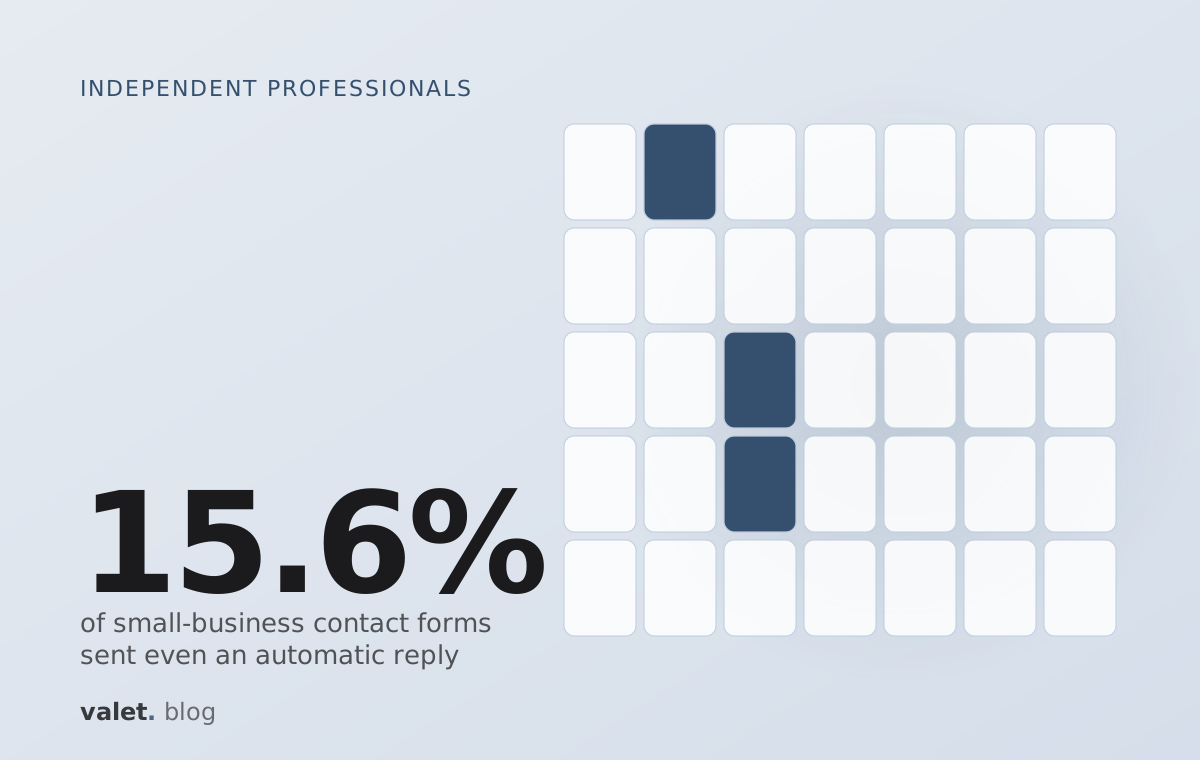
15.6%
of small-business contact forms sent even an automatic reply
Leadferno, 225 forms, Jun 2024
>70%
of home-service customers expect a same-day reply; 20% of pros reply within the hour
Jobber, 1,050 owners, 2026
55% vs 26%
trust AI to resolve an issue with a human path vs without one
Five9 CX Report, 3,000 consumers, 2026
An out-of-office message is a notice that nobody is covering, not coverage. Real cover does four things while you are away: it answers what can be answered from facts you have already decided, holds a time for after you return, keeps follow-ups going, and tells the customer plainly when you will reply to the rest. Customers accept that arrangement more readily than owners assume. In Five9's 2025 survey of 1,006 consumers, 72% said they were open to AI help as long as they could reach a person6. What they do not accept is silence, or a bot with no way out.
How do solo owners handle inquiries when they're away?#
Solo owners describe two choices, and both are reasonable. The first is the out-of-office message: switch it on, shut the door, deal with the backlog on return. The second is partial presence: check the inbox from the holiday and answer what looks important.
The clearest record of the trade-off is an AccountingWEB thread from January 2022, where a sole practitioner asked peers whether they switch off completely or still deal with client calls and emails. One reply: "As there's just me, I do look at emails and listen to phone messages while I'm away"1. A year earlier, another accountant asked whether colleagues "turn the out of office on and shut the door" or "keep any eye on emails even while off"2. The same question recurs well outside accounting. Threads in r/consulting (20+ comments, around 2024) describe returning to "40 to 60 emails a day"11; a one-person MSP in r/msp (150+ comments, around 2023) says he "can't take a day off properly"12; a Shopify owner (r/shopify, 60+ comments, around November 2025) notes "it's only me as the single company employee"13.
Why the out-of-office message looks like the right answer#
The out-of-office message survives because it is cheap, honest and nearly free of risk. It costs nothing to set up. It says something true. It cannot quote a wrong price, double-book a slot or promise a discount you did not approve, which is more than can be said for a hurried reply typed on a phone at a beach bar.
It also benefits from a low bar. Leadferno's 2024 test of 225 small-business contact forms found that 42.6% of submissions received no reply at all, and only 15.6% sent even an automatic acknowledgement3. Against that baseline, an owner with a dated out-of-office is ahead of most competitors. And partial presence has its own defenders: an owner who checks twice a day catches the urgent client matter, which no template can recognise.
These are the arguments of people who have run a practice alone for years. They are correct about risk. They are wrong about where the cost lands.
What does an out-of-office message actually cost you?#
The cracked assumption is that a prospect who reads "back on the 14th" will wait until the 14th. A prospect is not a client. A client has a relationship and a reason to wait; a prospect has a problem, a deadline and a search results page with other names on it. The out-of-office does not hold their place. It informs them, at the precise moment they are choosing whom to hire, that this business cannot help yet.
That is a perverse incentive built into the message: the more clearly it states your absence, the more efficiently it routes the buyer to a competitor. The owner sees a full inbox on return and reads it as demand that waited. Some of it did. The inquiries that did not wait leave no trace, because a lost prospect never writes back to say so.
Partial presence has a second-order effect of its own. The owner never fully leaves, and the replies sent are the ones that fit between other things: short, late and without a proposed time. The coordination cost moves from the office to the holiday.
The third arrangement that practitioners name is a person. "Before I had a no.2, I just had someone read my emails and pick up my redirected phone line," one AccountingWEB reply explains, with that person calling the owner only for urgent matters1. This is closer to coverage, but it carries a principal-agent problem. The reader is not authorised to quote, book or decide, so the reader escalates or waits. The inquiry is seen but not answered.
What does real holiday cover look like?#
The mechanism in one sentence: while you are away, every inquiry should get the answers you have already decided, a held time after your return, and an honest date for the answers only you can give.
That separates inquiries into three groups, which is the same split used for rules per topic in normal weeks.
| The inquiry asks | Out-of-office | Owner checks from holiday | Facts-based cover with honest handoff |
|---|---|---|---|
| "What do you charge for X?" | "Back on the 14th" | Answered if seen, often days later | Answered from your price list now |
| "Can we talk next week?" | No time offered | Rarely offered from a phone | A time held for the week you return |
| "Can you do it for less?" | Waits | Rushed decision, or ignored | Waits for you; customer told the date you will reply |
| A complaint or contract question | Waits | Pulls you into work | Flagged for you; customer told when you will reply |
| No reply from the customer after the first answer | Nothing | Nothing | Follow-ups continue, capped |
The table shows where the zero-sum trade-off sits. Out-of-office protects against wrong answers by giving none. Checking from holiday gives some answers at the cost of the holiday. Facts-based cover only answers what you would have answered the same way anyway, and leaves everything that involves money or judgement waiting, with a date attached.
What evidence supports covering inquiries while you're away?#
Three lines of evidence support the argument. They are listed from weakest to strongest.
First, customers expect a reply the same day. Jobber's 2026 survey of 1,050 home-service owners found more than 70% of their customers expect a same-day response, while only 20% of pros reply within the hour4. Home services is not consulting, but the expectation travels; an out-of-office meets it in letter only.
Second, delay is expensive in the one marketplace where it has been measured at scale. Entrepreneur reported in July 2026 on a Management Science study of Fiverr: a one-hour delay in responding cut the odds of being hired by 46%, and a delay of 24 hours or more cut them by 90%5. We have read the trade-press summary, not the paper, and a marketplace with side-by-side sellers is harsher than a direct email. The direction is still clear: two weeks is not a neutral pause.
Third, customers accept an assistant when there is a way to a person, and punish one when there is not. In Five9's 2026 report on 3,000 consumers, trust that AI would resolve an issue was 55% when a human escalation path existed and 26% when it did not7. The 2025 Five9 survey found 40% of consumers would leave a business after one bad experience6. And handoffs fail often: Pied Piper's 2025 study of service telephone calls found AI-to-human transfers failed 56% of the time8. That last figure is the strongest argument in this piece, and it cuts both ways. Cover that strands the customer is worse than an honest out-of-office. Cover that tells the customer exactly when you will reply is better than either.
| Input | Value | Basis |
|---|---|---|
| New inquiries per month | 8 | Assumption; use your own |
| Inquiries arriving during 14 days away | ~4 | 8 × 14/30 |
| Share you would normally win | 25% | Assumption; use your own |
| Project value | $6,000 | Low illustrative tier in the Consulting Success 2026 fees study10 |
| Expected value arriving while you're away | ~$6,000 | 4 × 25% × $6,000 |
Not all of that is lost to an out-of-office; some prospects wait. The point is the size of the exposure, which for many solo practices is larger than the cost of the holiday.
When is an out-of-office message still the right choice?#
The consensus still wins in three situations, and owners in them should keep the out-of-office.
- Your inquiries are mostly existing clients with live matters. An accountant mid-filing season or a consultant inside a retainer gets messages that need judgement, not facts. Cover cannot answer those, and a facts-based reply would feel evasive.
- You have no written facts. If your prices, minimums and availability live only in your head, there is nothing to answer from. Writing them down is the prerequisite, not an optional step.
- Your customers would rather wait for you than hear from an assistant. Gartner research reported by California Management Review in April 2026 found 64% of customers would prefer companies not use AI for service, and 53% would consider switching9. Some practices, especially those built on a personal relationship, are in that 64%.
Parental leave and sick leave change the inputs. Parental leave is long and planned, so the facts can be written and the handoff dates set weeks ahead. Sick leave is unplanned, which is the case for having the facts and rules in place before you need them: cover you can switch on from bed is the only cover that exists on the day.
How to set up cover before you go#
The checklist below is the Monday-morning version. It works with a human reader, an assistant, or a carefully written auto-reply; the order matters more than the tool.
HOLIDAY-MODE CHECKLIST (one week before)
[ ] Write the facts: prices or ranges, minimums, what's included,
    service area, lead times, cancellation policy.
[ ] Mark your return date and block the first two days for replies.
[ ] Open 4–6 slots in the week you return that can be held for new inquiries.
[ ] Decide the "always me" topics: discounts, refunds, complaints,
    contracts, deposits, anything legal or health-related.
[ ] Decide what counts as urgent and how you will be told (one channel only).
[ ] List open quotes and held times; decide who nudges them while you're away.
[ ] Test it: send yourself an inquiry from another address and read the reply.

ABSENCE REPLY (for new inquiries)
Subject: Re: [their subject]
Hi [name], thanks for getting in touch with [business].
[Owner] is away until [weekday, date] and will reply personally from then.
In the meantime, here is what I can confirm now:
- [answer to their question from the facts, or the price range]
- [what's included / minimum / lead time]
I can hold [day, time] or [day, time] in the week of [date] for a call.
Reply with one and it's yours.
For anything about [discounts / contracts / an existing job],
[owner] will reply on [date].
If this is urgent, [what to do].
— [who is writing: name, role, or "[business]'s assistant (AI)"]

ON RETURN
[ ] Read the log of what was sent and what is waiting for you.
[ ] Reply to every "always me" item first, in the order received.
[ ] Close any inquiry that got two nudges and no reply, with a reason.
The signature line matters. A reply from an assistant must say it is an assistant, and if it is AI it must say that too. The handoff contract in what "never stuck with a bot" has to mean sets out the rest. If the follow-ups during your absence need rules, the cap in how many times to follow up with a lead applies unchanged.
Where this argument would be wrong: if your own records show that inquiries arriving during past absences converted at the same rate as the rest, your customers wait, and the out-of-office is enough. Pull the last two holidays from your inbox and check before you change anything.
Where Valet fits#
Valet is built for the third arrangement. It answers forwarded inquiries from your own price list, calendar and policies, offers and holds real times, and keeps the follow-ups going, capped at two by default. Topics you set to "Always you", such as discounts, complaints and contracts, wait for you, and the customer is told when you will reply. Every reply is signed as your assistant and says it is AI, and each one has a Valet receipt, so on return you can read what was asked, the rule used and what was sent. The free lead check looks at 10–20 recent inquiries, including any from your last time away, and shows what went unanswered and what it was worth.
Questions people ask
How do I handle client emails on vacation when I'm self-employed?
Decide in advance which questions can be answered from written facts (prices, availability, policies) and which must wait for you. Have those answered while you are away, hold times for after your return, and tell everyone else the exact date you will reply.
Is an out-of-office message enough for a small business?
It tells the customer you are away, but it answers nothing and books nothing, and it arrives at the moment they are deciding whom to hire. Leadferno's 2024 study found 42.6% of small-business form leads got no reply at all, so the competing businesses are not setting a high bar, but a customer with a deadline will still write to the next one.
Should I check email while on holiday?
Checking in occasionally limits the damage, but it means you never fully leave, and replies sent from a phone between other things tend to be short and late. If you choose to check, decide the times in advance and limit yourself to the items flagged as needing you.
What should an absence reply say?
Who is writing, the exact date you are back, answers to the common questions that can be answered now, a time that can be held for after your return, and what to do if the matter is urgent.
Will customers mind being answered by an AI assistant while I'm away?
Some will. Gartner research reported in 2026 found 64% of customers would prefer companies not use AI for service. Five9's 2025 survey found 72% were open to AI if they could escalate to a person, so the honest handoff matters more than the tool.
Sources
Confidence: H primary source checked · M credible secondary or reported · L vendor claim or single report. Reddit and forum items are quoted from public threads and summarised, not endorsed.
- Sole practitioners and holidays · AccountingWEB Any Answers · 2022-01-10 H
- How do you handle taking a week or 2 off? · AccountingWEB Any Answers · 2021-02-16 H
- Research: Website contact forms and lead management, uncovering costly mistakes · Leadferno · 2024-06-28 H
- 2026 Home Service Trends Report (1,050 US owners) · Jobber · 2026 H
- Companies are tracking response time delays for freelance jobs · Entrepreneur (reporting a Management Science study of Fiverr data) · 2026-07-16 M
- New Five9 Research Reveals Balancing AI with Human Connection is Key to Winning Customer Experience · Five9 · 2025-03-13 H
- Consumers will try AI, but they want a human within reach, Five9 report finds · AccountsRecovery.net · 2026-07-03 M
- Group 1 tops annual Pied Piper Service Telephone Effectiveness study as some stores lean into AI tools · Auto Remarketing · 2025-07-07 H
- Chatbot frustration is real: hidden costs and best practices · California Management Review Insights · 2026-04-28 M
- Consulting fees study · Consulting Success · 2026-05-01 H
- "Advice for Managing Email after Vacation" (thread, 20+ comments; Google snippet) · Reddit, r/consulting · c. 2024 M
- "Complete overload - one man MSP" (thread, 150+ comments; Google snippet) · Reddit, r/msp · c. 2023 M
- "What do store owners do when they go on holiday?" (thread, 60+ comments; Google snippet) · Reddit, r/shopify · c. 2025-11 M
How to cite this page
Cite this page
Valet, "Who answers your inquiries when you're on holiday, sick or on parental leave?", valet.team, October 2026.
Keep reading
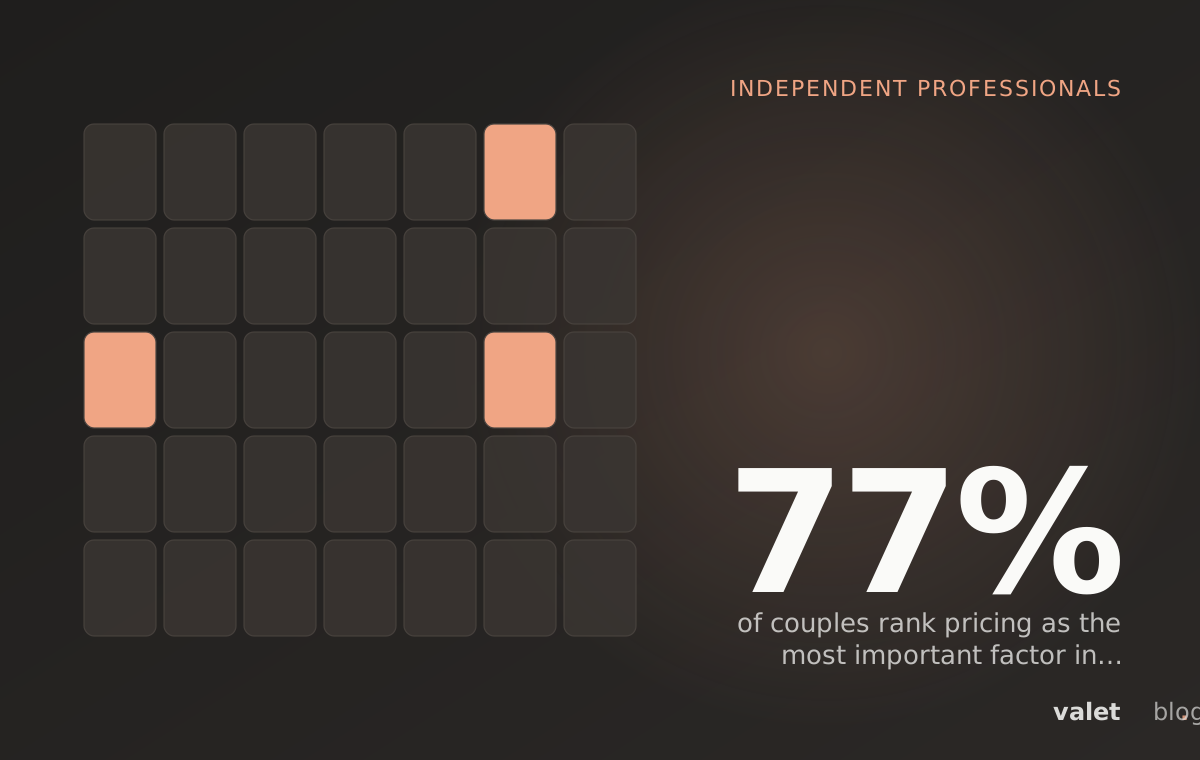 Independent professionals"What are your rates?" by email: answering pricing and pre-sales questions without a call, a lost lead or an invented discountThe person asking for your rates is not trying to trap you. They are trying to find out if you are in range before they spend a call on you. Answer that question, then give them one easy next step.Explainers · 9 min · 1 October 2026
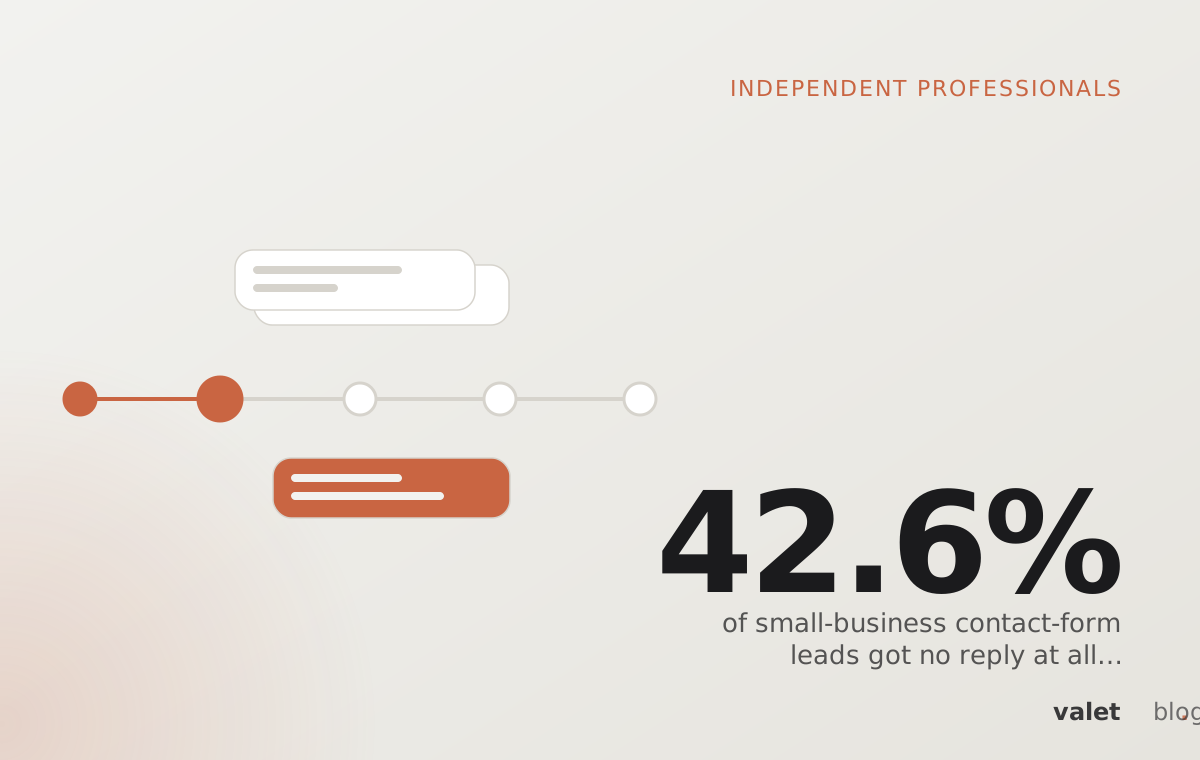 Independent professionalsDiscovery-call no-shows for consultants and coaches: real rates, why they happen, and what actually fixes themA no-show is the last visible failure in a booking path that broke earlier. This piece traces that path stage by stage, separates the sourced numbers from the recycled ones, and ends with a policy and recovery sequence you can copy.Technical desk · 11 min · 1 October 2026
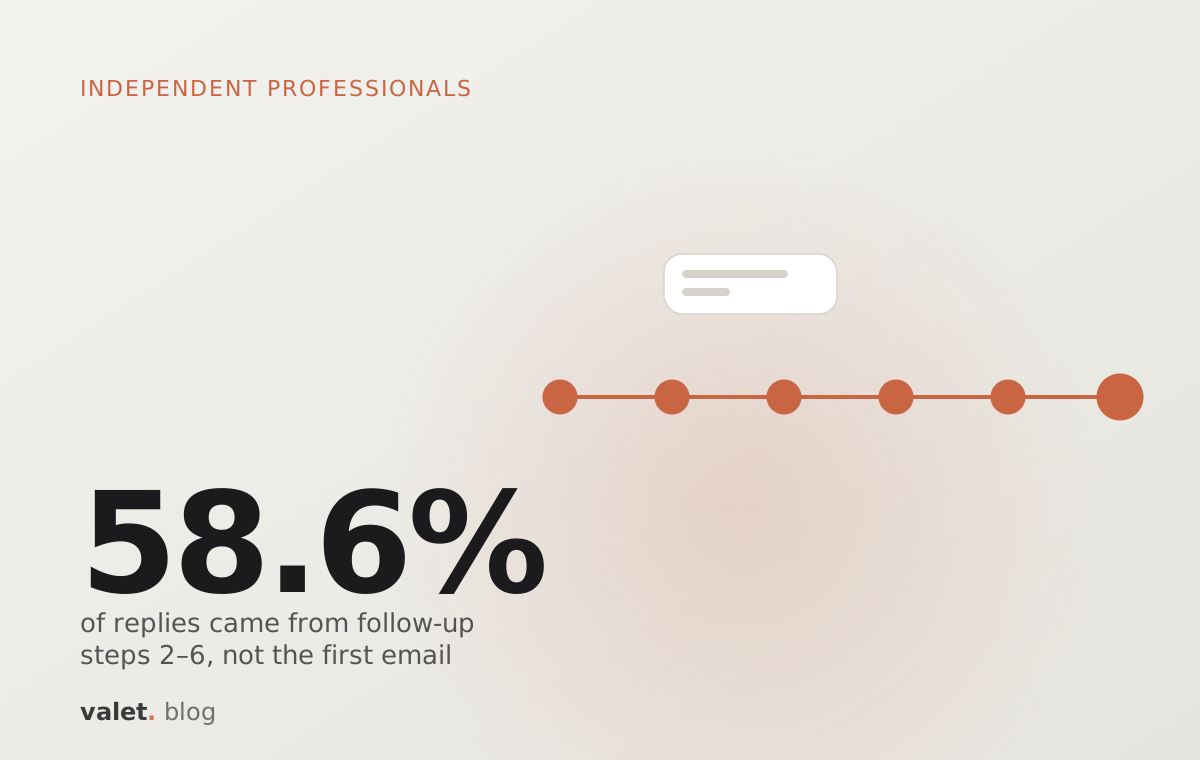 Independent professionalsClient ghosted after the proposal or quote: a follow-up plan for consultants, designers and small agenciesSilence after a proposal is the most common ending in independent work, and the least discussed. What the people who send proposals say about it, what the evidence says about the second and third message, and a plan that ends with a reason instead of a fade.People at work · 8 min · 1 October 2026